
Resources
Better assessment decisionsstart with better questions.
Practical guidance to help HR leaders and hiring managers choose the right evidence for the decision at hand.
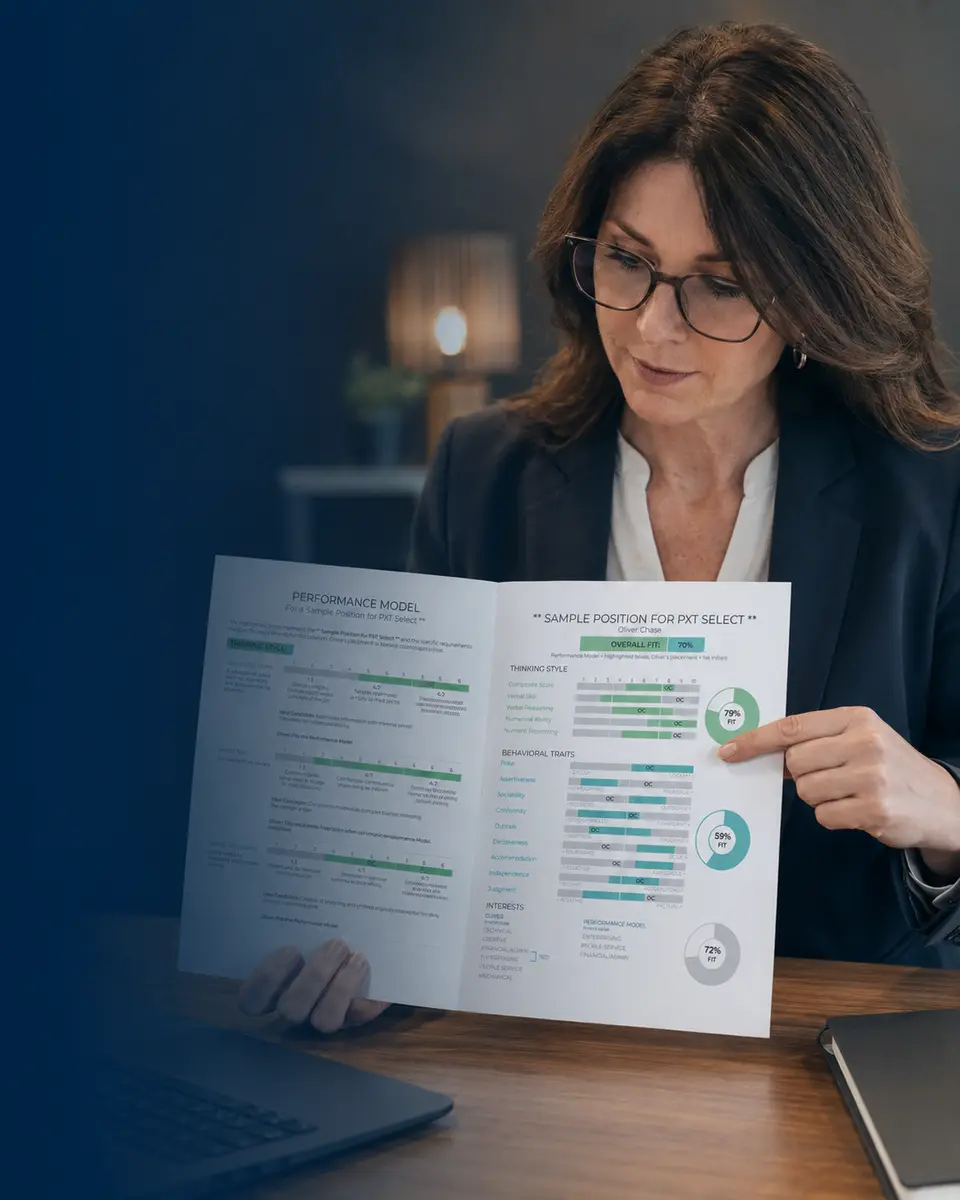
Workforce Insights by John P. Beck, Jr.
Workforce decisions, explained clearly.
Each article explains what is changing, why it matters to employers, and what leaders can do next.
Seasonal Hiring Is Moving Fast. Do Not Lower the Standard.
Seasonal hiring moves fast. Learn how to remove delays, define the job, and use Step One Survey II for consistent early screening.
When AI Hands the Customer Back, Who Takes Over?
When routine requests move to automation, employers need to review what reaches their people. Define service standards and assess fit for the conversations that still require human attention.
Your Employees Don’t Need the Same Personality. They Need to Work Better Together.
A practical approach to using Everything DiSC on Catalyst for clearer conversations, useful feedback, and stronger working relationships.
Before You Add Headcount, Find Out What Is Limiting Performance.
A practical review for employers deciding whether to hire, develop employees, or fix the work itself, with job-fit evidence and transparent capacity math.
AI Can Rewrite the Résumé. It Cannot Prove Job Fit.
AI can improve a résumé without proving the person can succeed in the job. A practical framework for replacing résumé confidence with job-related evidence.
Employees Are Turning Against AI. The Leadership Problem Is Bigger Than the Technology.
AI resistance often exposes a leadership trust problem. A practical framework for communicating change, preparing managers, protecting human accountability, and measuring real business value.
Decision library
Answers organized around the decision.
What is employee turnover costing you?
Estimate turnover rate, cost per departure, annual financial impact, and potential savings without providing an email address.
Read more →PricingHow does assessment pricing work?
See how unit-based, unlimited-use, and enterprise options can align with workforce size, hiring frequency, and development scope.
Read more →Candidate experienceWhat happens when a candidate takes PXT Select?
Follow the candidate journey from the invitation and secure access through orientation, consent, and assessment launch.
Read more →ProcessAssessment results are evidence, not the decision
Where assessment data belongs alongside interviews, experience, references, and job requirements.
Read more →LeadershipWhen does 360-degree feedback help?
The questions to answer before selecting a multi-rater leadership assessment.
Read more →SafetyWhat can a safety assessment measure?
A clear distinction between safety attitudes, job knowledge, training, and observed behavior.
Read more →BookBreaking the Code
John P. Beck, Jr.’s framework for hiring, Occupational DNA®, and the modern organization.
Read more ↗Responsible assessment use
An assessment should strengthen judgment, not replace it.
The best assessment process is job-relevant, consistent, understandable, and combined with other evidence.
- Choose the tool for a defined business decision
- Use consistent administration and scoring
- Train decision-makers to read the report appropriately
- Combine results with structured interviews and job evidence
- Review models and processes as the work changes
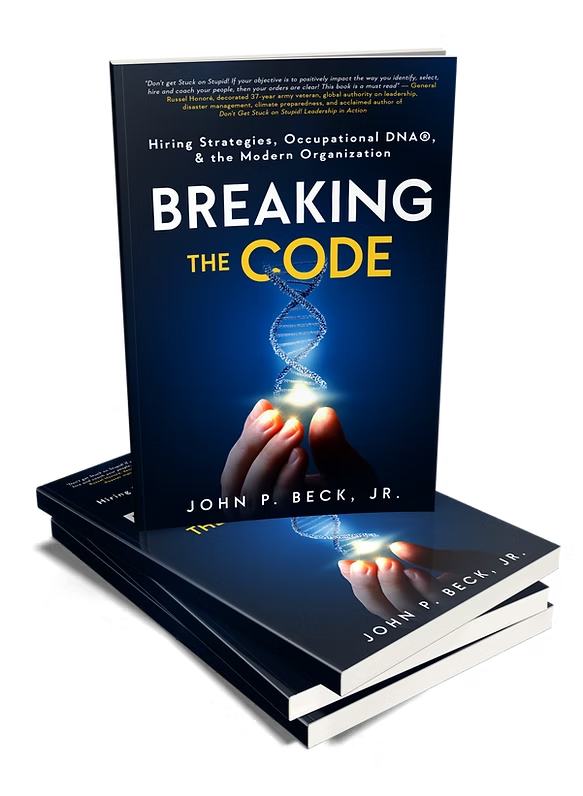
Featured resource
Breaking the Code
A direct challenge to résumé-first hiring and a practical introduction to Occupational DNA®.
View on Amazon ↗