
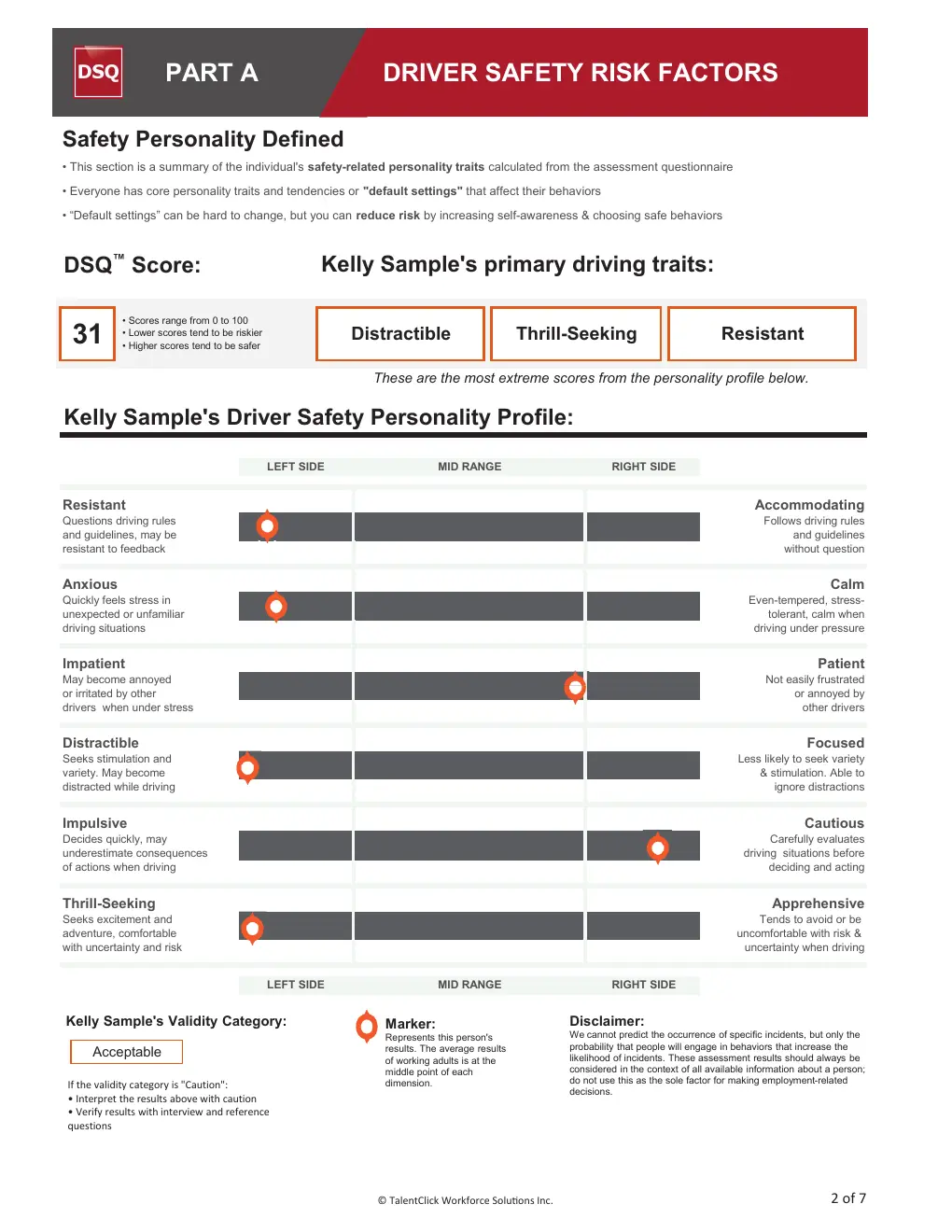
Resistant vs. Accommodating
Explores rule-following, openness to feedback, and reactions to established procedures.
Driver Safety Quotient™ assessment
Measure six personality dimensions linked to driver safety behavior, then use the results for structured selection, onboarding, coaching, and Driver Safety Self-Awareness.
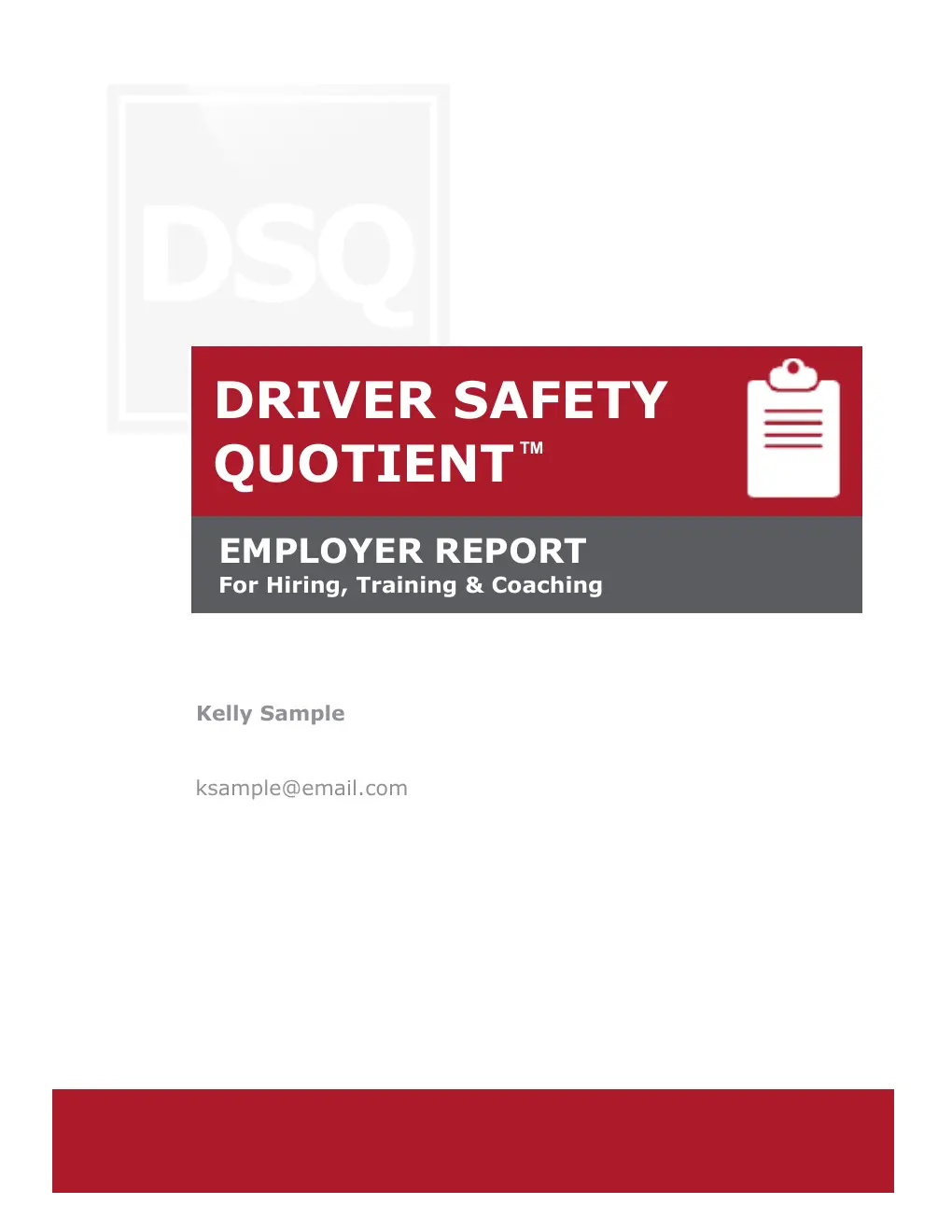
Behavioral risk behind the wheel
Driver Safety Quotient™ measures personality dimensions that research has linked to unsafe driving behavior, near misses, violations, and preventable incidents.
Employer reports provide a driver safety profile, suggested interview questions, and personalized coaching considerations. Participant reports help drivers recognize default tendencies and choose safer responses.
DSQ is one source of behavioral evidence. It does not replace motor vehicle records, licensing, skills checks, road tests, training, supervision, telematics, or incident history.
What Driver Safety Quotient™ measures
Explores rule-following, openness to feedback, and reactions to established procedures.
Explores stress tolerance and the ability to think clearly in unfamiliar or pressured situations.
Explores emotional control and how frustration may affect interaction with other people.
Explores the need for stimulation and the ability to maintain focus around distractions.
Explores decision speed and the tendency to consider consequences before acting.
Explores comfort with excitement, uncertainty, novelty, and risk.
Review the evidence
Review the official DSQ employer and participant reports and the broader TalentClick solution overview before deciding how the assessment fits your driver-safety process.
Review the official product material and an actual sample report before deciding whether the assessment fits the role and business decision.
A practical driver-safety implementation
Document vehicle type, route conditions, exposure, required credentials, and the driver behaviors that matter most.
Invite applicants or current drivers through a consistent, job-related process.
Examine the full profile, primary tendencies, validity information, and the context around each score.
Use structured interview questions, records, references, road tests, telematics, and performance history as applicable.
Use participant insight and Driver Safety Self-Awareness to select actions, reinforce training, and create accountability.
Use the assessment responsibly
Driver-specific insight
DSQ separates management information from participant self-awareness so each audience receives the guidance needed for its role.
Shows the driver safety personality profile with suggested interview questions and personalized coaching considerations.
Provides personal insight, self-coaching guidance, and a Driver Safety Self-Awareness action plan.
Driver Safety Quotient™ questions
Driver Safety Quotient™ is a behavioral assessment that measures six personality dimensions linked to driver safety behavior.
DSQ measures Resistant vs. Accommodating, Anxious vs. Calm, Impatient vs. Patient, Distractible vs. Focused, Impulsive vs. Cautious, and Thrill-Seeking vs. Apprehensive.
No. DSQ identifies behavioral tendencies associated with risk patterns. It cannot predict whether a specific driver will have a collision or other incident.
A motor vehicle record documents certain past events. DSQ adds insight into personality tendencies that may influence future behavior. Employers should use both with other job-related evidence.
Yes. DSQ participant reports and Driver Safety Self-Awareness can support coaching, refresher training, and development with current drivers.
No. DSQ does not test vehicle operation, technical knowledge, licensing, or physical capability. Use appropriate skills and qualification evidence separately.
No. DSQ should be one part of a consistent, job-related process that may include records, structured interviews, references, road tests, and other relevant evidence.
Employer reports provide interview and coaching guidance. Participant reports provide self-coaching insight and Driver Safety Self-Awareness action planning.
Review the decision before choosing the tool
Tell us where the current process is falling short. We’ll tell you whether an assessment belongs in the solution.