
Resistant vs. Accommodating
Explores rule-following, openness to feedback, and reactions to established procedures.
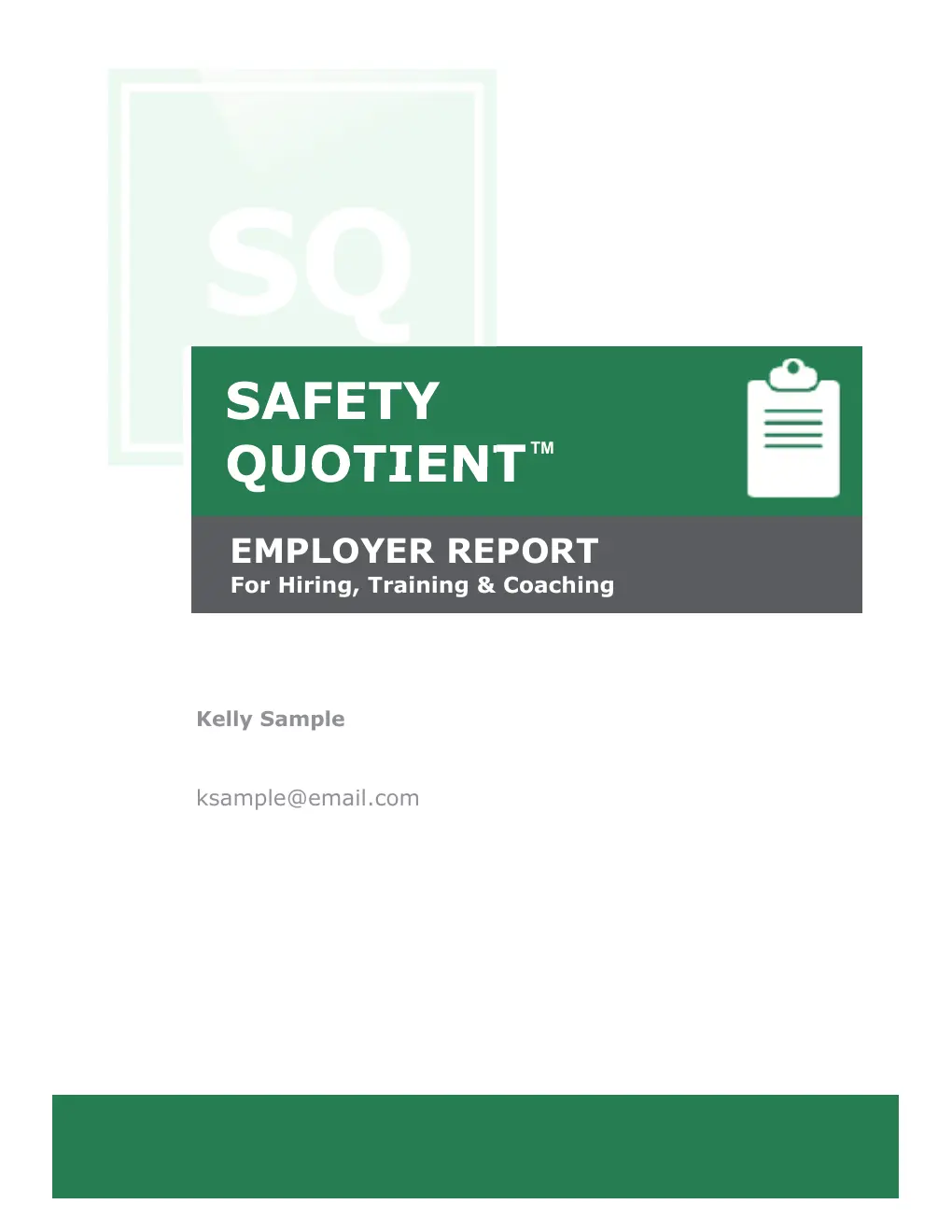
Safety Quotient™ workplace assessment
Identify safety-related personality tendencies, then use the results to improve structured interviews, onboarding, coaching, and personal responsibility for safer behavior.
Behavior is one part of safety
Safety Quotient™ measures personality dimensions associated with safety-related behavior and human error.
The results identify natural tendencies that may affect rule acceptance, focus, caution, stress response, patience, and comfort with risk. Employer reports provide structured interview questions and coaching considerations. Participant reports build personal awareness and action planning.
The assessment contributes behavioral evidence. It does not replace training, supervision, work history, job knowledge, physical capability, or the organization's safety management system.
Read the Safety Quotient research explainer →What Safety Quotient™ measures
Explores rule-following, openness to feedback, and reactions to established procedures.
Explores stress tolerance and the ability to think clearly in unfamiliar or pressured situations.
Explores emotional control and how frustration may affect interaction with other people.
Explores the need for stimulation and the ability to maintain focus around distractions.
Explores decision speed and the tendency to consider consequences before acting.
Explores comfort with excitement, uncertainty, novelty, and risk.
See the assessment
Watch the overview, then review actual employer and participant reports, coaching guidance, interview questions, and Safety Self-Awareness action planning.
A practical safety implementation
Clarify the work conditions, critical behaviors, known exposures, and decisions the assessment will support.
Send the online assessment to an applicant, employee, or leader within a consistent and job-related process.
Examine the six dimensions, primary traits, validity information, and report guidance in context.
Use structured interview, reference, onboarding, or coaching questions to examine how tendencies show up at work.
Select specific behaviors, reinforce training, and use Safety Self-Awareness actions with supervisor follow-through.
Use the assessment responsibly
Actionable safety insight
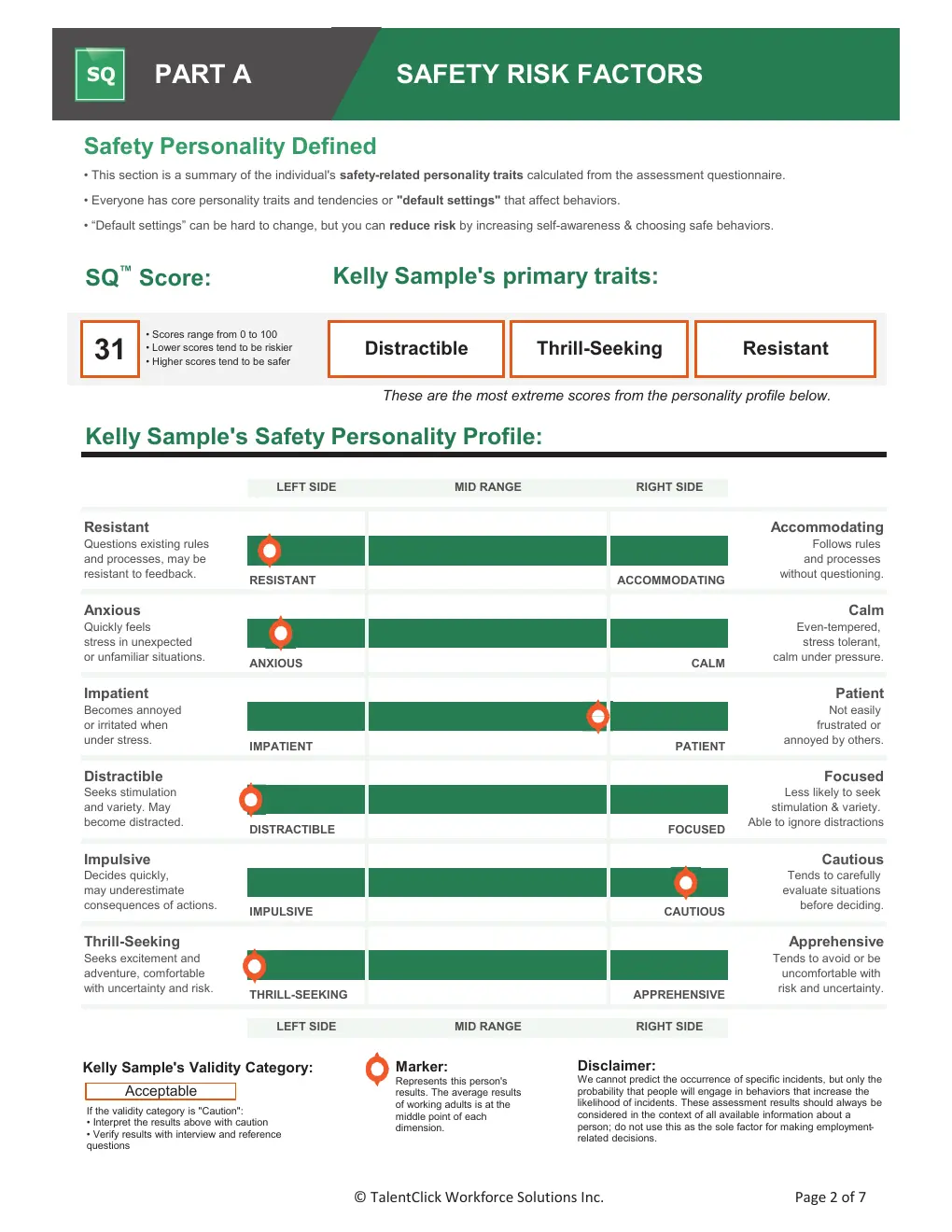
The report system converts six behavioral dimensions into interview questions, coaching considerations, personal reflection, and documented action planning.
Summarizes the safety personality profile and provides risk considerations, interview questions, and coaching guidance.
Gives the participant personalized self-coaching considerations and a Safety Self-Awareness action plan.
Applies the same safety dimensions to leadership behavior, coaching, communication, and safety accountability.
Safety Quotient™ questions
Safety Quotient™ is a behavioral assessment that measures six personality dimensions associated with safety-related behavior and human error.
It measures Resistant vs. Accommodating, Anxious vs. Calm, Impatient vs. Patient, Distractible vs. Focused, Impulsive vs. Cautious, and Thrill-Seeking vs. Apprehensive.
No assessment can predict whether a specific person will have an incident. Research shows that certain behavioral tendencies are associated with higher or lower risk patterns. The results should be considered with all other available information.
It can contribute job-related behavioral information to a structured selection process for safety-sensitive roles. It should not be the sole factor in an employment decision.
Yes. Organizations use employer and participant reports for onboarding, coaching, training, safety self-awareness, and leadership development.
Safety Self-Awareness is the process of recognizing how personal tendencies, thoughts, feelings, and behavior choices may affect safety outcomes, then selecting safer actions.
No. It supports personalization and coaching. It does not replace required training, policies, supervision, job knowledge, or regulatory compliance.
The report library includes employer and participant reports, interview and coaching guidance, action planning, and a specialized Safety Quotient for Leaders application.
Review the decision before choosing the tool
Tell us where the current process is falling short. We’ll tell you whether an assessment belongs in the solution.